Login/Register


Your cart is currently empty.

Turn This Summer into Your Success Story
Turn This Summer into Your Success Story

You've made the decision to start a new career and your keen to get going and make it happen. So how long does it take:
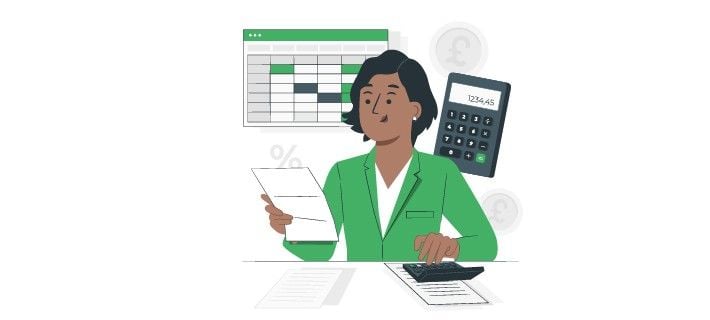
The Association of Accounting Technicians (AAT) is a leading professional body dedicated to developing accounting technicians and finance professionals. Achieving an AAT qualification is a great way to demonstrate your expertise in key areas such as management accounting, double entry bookkeeping, and the preparation and drafting of financial statements.
Recognised both in the UK and internationally, AAT qualifications are highly valued by employers across the accounting industry.
Whether you’re starting out or looking to enhance your existing skills, studying AAT gives you the knowledge and confidence to succeed in a wide range of accounting and bookkeeping roles.
By building a solid foundation in accounting principles and practical skills, you’ll be well-equipped to progress in your career and reach your career goals.

The AAT qualification structure is designed to support learners at every stage of their accounting journey.
There are three main levels: AAT Level 2 Certificate in Accounting, AAT Level 3 Diploma in Accounting, and AAT Level 4 Diploma in Professional Accounting.
Each level builds on the last, allowing you to develop your knowledge and skills step by step. The Level 2 Certificate is ideal for beginners, providing a solid introduction to accounting and bookkeeping.
As you progress to Level 3 and then to the Level 4 Diploma in Professional Accounting, you’ll tackle more advanced topics and gain a deeper understanding of professional accounting practices.
The flexible structure means you can study AAT courses online, through distance learning, or in a live classroom setting, making it easy to fit your studies around your commitments.
Whether you’re starting with the AAT Level 2 Certificate in Accounting or progressing to the AAT Level 4 Diploma in Professional Accounting, you can study at your own pace and build the expertise you need for a successful career in accounting.

How long does it take, on average, to study the different online AAT level courses and live classroom programmes:
The times given above are guidelines and achieved by most students. However, the more hours you study at each level, the more you will fast-track your studies towards becoming an AAT qualified accountant.
Online courses are available for all AAT qualifications, offering flexibility, interactive e-learning, and the ability to study at your own pace.
These online courses are ideal for those who need to fit study around work or other commitments.
Some students fast-track their Level 2 studies by increasing the hours spent studying to launch their careers as soon as possible.
They then similarly fast-track at Level 3 to grow their entry role into a career-building trajectory of promotions.
Once established, they then study level 4 at a more normal pace especially if they plan to progress to chartered accountancy afterwards.
The more you study, the more you need to pace the learning to achieve longevity in your study.
It maybe that a student intends to open their own practice and company as soon as possible, which is another reason to fast-track Levels 2 and 3.
As with everyone though, it is important not to over do the speed of study because it isn’t sustainable long-term if it doesn’t fit comfortably within your busy life.
Our AAT online study options are designed to accommodate busy lives, allowing you to balance learning with your other commitments.

The answer to when, is very different to how long does it take to study AAT.
When happens a lot sooner because building your career is a combination of many stepping stones of study and experience.

You can start to apply for employment as soon as you have passed your first two Level 2 exams, which is potentially 12-16 weeks after you begin your studies.
At this stage you are part-qualified Level 2 and have the knowledge and skills employers want for entry-level roles. Ideally, if you wait until you have passed the full Level 2, circa 6 months, your skills will have increased in more detail potentially earning you a higher salary.
Opportunities are likely to be higher also. Study AAT via our Career Academy with up to 4 months work-experience and you significantly increase your probability of gaining employment sooner.
AAT qualifications open up a wide variety of jobs in the accounting and finance sector, enhancing your employability and access to different roles.
I cannot give a definitive answer as it depends on when you gained employment and what accounting experience you previously had. When you are studying, it is in the employers interest to keep your loyalty and reward your efforts.
As a guideline, most students say they are given a pay rise on successful completion of each level.
If you have successfully completed Level 3 and are starting Level 4 you should be in a more demanding role than the entry-role where you began.
Each level should make a difference to your future, your job role and your income meaning, the time taken per level earns it’s own reward in experience and goals achieved.
Those rewards will motivate you to achieve the next level. If the growth opportunities are not available with your current employer, start to look for next-step opportunities.
However be aware, if the employer is sponsoring your study, there will be penalties if you leave the employment before the time agreed in your learning agreement.
Always remember, qualifications open doors, it is your ability to perform well in your role that will gain the promotions. Make sure you stand out in the crowd and the career growth will happen.
AAT remains the leading accounting qualification choice for employers. It is therefore the ideal selection for students to choose who are looking to secure a role in an accounting and finance department.
The AAT qualifications are renowned globally for delivering extensive, hands-on work-based knowledge.
Studying professional qualifications require a time commitment within your already busy life.
Don’t be put off by this because it’s doable with the right approach and study structure. Professional study is a life changing marathon, it’s not a sprint.
There are many ways in which you can study to meet your career goals. Choosing and planning the right option for you will help you achieve the qualification and your future career.
You can study via online e-learning courses, distance learning, classroom, online classroom live or blended learning.
Online e-learning is by far the most popular because of the 24/7 access to your studies. If you add remote assessments you have total control and flexibility over how you learn.
If you choose to sit assessments at a local centre, there are frequent dates to choose from so still a good option.
There are no entry requirements, except a good command of English and Maths, to study the AAT Level 2 courses.
The equivalent level in Scotland is SCQF Level 6 Certificate in Accounting. All Level 2 qualification begin with the same units and same exams. :
The above two units are classed as the financial units. These are the two main Level 2 exams that contain the core understanding that industry demands. In the Bookkeeping option, they are the only two units. In the accountancy route they are two of four units.
In the above units you will study double-entry bookkeeping and the preparation of final accounts for sole-traders, partnerships and small limited companies.
If you study the accounting route then the two additional units to be studied are:
The last two units expand your Foundation Certificate in Accounting understanding further to include internal cost management accountancy and a better awareness of industry and commerce in general.
At Level 3 again the first two units of both routes are identical.
On successful completion of the above two units, the AAT bookkeeping qualification is complete and you will become a professional bookkeeper. To complete the accounting route you are required to complete two more units:
The level 3 is designed to move your understanding from the fundamentals of Level 2 to an advanced diploma in accounting supervisory understanding. This includes professional ethics in readiness for completing the level 4 and becoming an AAT qualified accountant.
The AAT training for Level 4 Diploma in Professional Accounting is the final level to becoming an AAT Accountant.
The professional advanced Level 4 online course has three mandatory units that focus on drafting financial statements, interpreting financial performance, and applying management techniques. Students are also required to study 2 optional units.
Mandatory units
2 optional units to be chosen from the following 5:
When you successfully qualify at the professional diploma in accounting Level 4 and with a good standard of relevant work experience, you can apply for membership and gain the professional MAAT status (Full AAT Membership).
You are also able to apply for Member in Practice. MAAT status gives designatory letters that can be added after your name.
When you study online AAT courses, you choose the amount of time studied each week.
Online courses for AAT qualifications offer flexibility and accessibility, making it easier for learners to fit their studies around other commitments.
If you study in a traditional classroom the AAT courses are predominantly blended learning and rarely full-time.
Modern study is very much about increasing student success by offering study at a pace and within a timeframe that meets the learners personal commitments.
The flexibility of modern learning enables the learner to learn and progress at a time when understanding is achieved and not when time constraints dictate they move to the next lesson.
AAT bookkeeping qualifications to become a professional bookkeeper takes less time to prepare and take exams.
These courses specialises in finance only whereas the accounting route focuses on the full spectrum including financial accountancy for external parties and internal management techniques for business efficiency and effectiveness.
The shorter bookkeeping qualification isn't easier than the accountancy route. It has the same complexities, just less units.
The AAT Level 1 Award in Bookkeeping is added freely to our Level 2 AAT Certificate in Bookkeeping and Accounting courses as pre-reading to start Level 2.
The actual starting Level for AAT is Level 2 and not Level 1.
Level 1 is an introductory qualification for school leavers or less confident learners who want an introduction before starting the full programme.
AAT Level 1 Bookkeeping takes circa one month to complete if sitting the exam. It is equally as beneficial to just work through it as additional pre-reading when starting Level 2, which will save you the cost of the Level 1 AAT membership and the assessment fee.
All students learn at a different pace and that is fine and perfectly natural. There are three factors that can influence the pace.
Learning how you learn best will increase the depth of learning and your likelihood of success. The three factors affecting the pace of learning are.
Take the time you need to fully understand. It is a false economy if you rush and then need to return and repeat past lessons.
On average it takes 6-8 hours of study a week for each lesson. There will be times when you take less and times when you take longer.
The most effective study in time and amount completed, is to study without parameters. As soon as you say, 'I will achieve X in this study session' you create additional pressure.
It is good to be driven, but as soon as strict parameters are set, your focus is split between meeting the time goal and understanding the subject matter.
The nearer you get to the end of the session the more your focus is on the time.
You are being equally as driven by thinking I will achieve in this session what I am capable of achieving. By taking this approach, you will achieve a lot more understanding and at a greater depth because you're only concentrated on the topic.
Many students study AAT with varying amounts of prior accounting knowledge. This is obviously an advantage and can mean your study time is less because of your overall previous understanding.
Existing knowledge can also be a distraction that causes confusion. Many students whilst having years of experience, have that experience using accounting software packages only. Or their expertise is in a specific area of accounting.
AAT studies are taught through manual accounts so the learner understands the intricacies of accountancy.
When students try to relate their job to the manual studies they become confused because there isn't an exact correlation.
The outcome is the same, but how the outcome is achieved differs between manual accounting that shows all and software accounting where the system completes a lot of calculations unseen.
It is great to relate work with study and it does help most of the time, but don't make the 'relating to role' central to your understanding because it will unnecessarily complicate your learning and understanding.
Every learner has a unique learning style and when embraced, your learning is simplified and long-term, means you are capable of studying to higher levels.
Our programmes offer resources that match all key learning styles so you can select resources and learning methods that best suit you.
The four key learning styles are:
It's important not to take the percentages above literally as we all have a trait of all learning styles within us and can appear in more than one percentage rating.
What is important to take from the above styles, is that one of those styles will dominate you in how you learn best. Favour that style as your lead source of learning and you will find your learning is transformed.
learn best when a teacher talks and they listen making notes. Live or recorded online classroom is ideal as their lead learning resource.
This should then be followed by the textbook to consolidate detailed learning and then finally the online e-learning
learn best from listening and following diagrams and other visual learning tools. Recorded lectures are ideal as they allow the learner to stop and start the lectures.
This gives time to relate what they hear to the diagrams they see in the lecture workbook and textbook.
Visual learners will often listen to the recorded lecture and focus on the study text at the same time. There isn't a best way to do this, it is down to personal preference. After the textbook summarise your learning with the e-learning.
learn best by leading with the study textbook. The reflective learner likes to read sections and think it through often creating mental scenarios to understand.
Kinaesthetic learners learn by doing, so will learner best by the details of the study text book and the constant examples and exercises to complete.
Both learning styles will then benefit from consolidating their knowledge with the recorded lectures.
Every aspiring AAT student like you will have a different learning pace and completion time for the qualification.
Embrace who you are and how you learn because every learner is normal. As long as you prioritise understanding the concepts at your own pace, you'll find the pace that you're comfortable with and can commit to.
Achieving an AAT qualification involves completing a series of assessments designed to test your knowledge and practical skills in accounting, bookkeeping, and financial management.
These assessments include a mix of computer-based exams and practical tasks that reflect real-world scenarios you’ll encounter in the industry.
The rigorous assessment process ensures that you’re fully prepared to meet the demands of employers and excel in your chosen career.
Once you’ve successfully completed all required exams and assessments, you’ll be awarded your AAT certification—a respected credential that demonstrates your commitment, knowledge, and skills to employers across the accounting sector.
This certification is a valuable asset, opening doors to new job opportunities and helping you stand out in a competitive industry.
When planning to study AAT, it’s important to consider the costs involved. AAT course fees typically range from £1,000 to £3,000, depending on the course provider and the level of qualification you choose.
In addition to tuition fees, you may need to budget for exam and assessment fees, as well as study materials.
Many providers offer flexible payment options, and with the availability of online AAT courses and blended learning, you can find a study method that fits both your schedule and your budget.
Taking the time to compare different AAT courses and providers will help you find the best value for your investmen
Remember, the cost of your AAT course is an investment in your future career and earning potential.
An AAT qualification is a gateway to a wide range of career opportunities in accounting and finance.
With the skills and knowledge gained from your studies, you can pursue roles such as accounting technician, bookkeeper, management accountant, or financial controller.
Many AAT qualified professionals go on to work in industry, practice, or the public sector, and some even start their own practice as a bookkeeper or accountant.
As you gain experience and continue your professional development, you can progress to more senior positions or further your studies towards chartered accountancy.
The AAT qualification is a recognised stepping stone that can help you achieve your career goals, providing you with the confidence, skills, and industry recognition needed to succeed in the world of accounting.
Whether you’re looking for your first job or aiming for a promotion, AAT opens the door to a rewarding and dynamic career.
Join the thousands of individuals, small businesses, and large corporations who trust e-Careers.
Chat with our friendly experts today to discuss your training needs. Call us now on
Alternatively, you can request a callback
Enquire Now





















 AAT Accounting
 CIPD Human Resources
  DMI Digital Marketing
  CV Writing
 Interview Coaching
 AWS Cloud Computing
 AI Apprenticeships
 AI Consulting